Marketing automation
15 Practical AI Agent Examples to Scale Your Business in 2026


AI agents bring exciting functionality to building with AI, adding usefulness that goes beyond automation. They are also already delivering value across industries, from fraud detection and customer support to logistics, HR, manufacturing, agriculture, and energy optimization — often by automating repetitive decision-heavy work.
Let’s dig into what AI agents are, the various types that exist, and some AI agent examples across industries — so you can understand how to use them in your work and build them using a tool like n8n.
An AI agent is a system that operates autonomously to perform tasks, using AI technologies (like LLMs), connected tools, and even coordinates with other agents as part of more complex workflows.
The major factors that define an AI agent include the ability to:
AI agents are a very similar concept to AI workflow automation tools in that they can both be designed and used to assist with specific types of tasks. The major difference lies in how they go about executing tasks: AI workflow automation tools automate predefined sequences of tasks across apps and services, while AI agents are autonomous software that interpret goals, reason, plan, and act without a rigid pre-scripted sequence.
The way you build AI agents and AI workflows can also involve different approaches and components.
To understand how AI agents work and what they’re capable of, it’s helpful to categorize them in terms of the different ways they function:
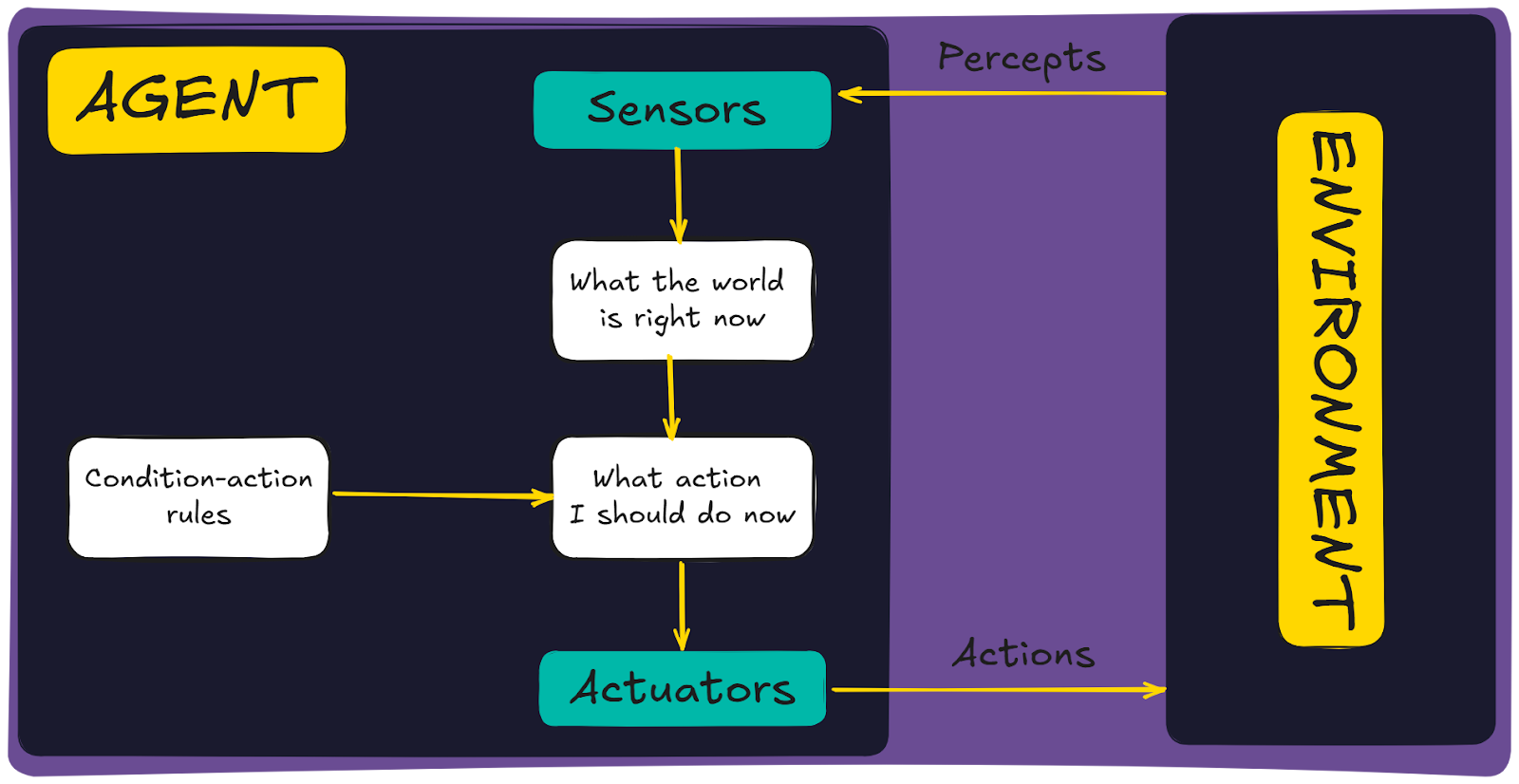
Simple reflex agents use predefined rules to map current perceptions to actions. Think “if this, then that,” a comparable framework to the traditional automation and programming mindset. “Reflex” is the key word here. They don’t store past information or try to reason about the future; they just react to situations.
For example, “If I get a new email from a certain sender, apply a specific label to categorize it,” or in a customer support workflow, “If a message contains the word ‘refund,’ automatically route the ticket to the billing team.” This type of agent is useful in predictable or otherwise stable environments with simple rules, but it can’t handle situations that require context or history to make good decisions.