Sales
Human in the loop automation: Build AI workflows that keep humans in control

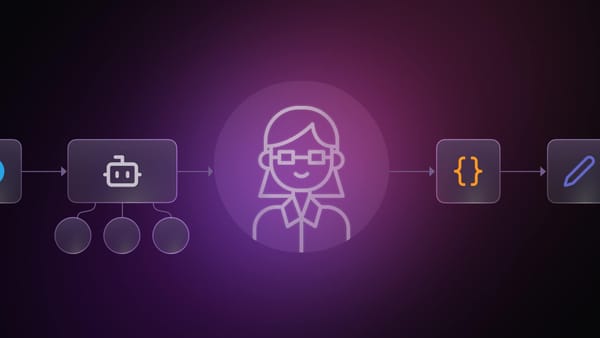
Your AI workflow drafts customer emails, schedules social posts, and approves expense reports — seamlessly, most of the time. But one misinterpreted instruction or a single hallucinated fact can suddenly create angry customers, compliance headaches, or costly mistakes.
The problem isn’t that AI can’t handle these tasks. It’s that AI shouldn’t handle them alone… at least not yet.
Since ChatGPT became widely available, AI has made incredible strides. Yet we’re still far from artificial general intelligence (AGI), the kind of superintelligent AI capable of human-like reasoning and judgment. For now, the smartest approach is a partnership: humans and AI working together, each covering what the other can’t.
That’s where human-in-the-loop (HITL) automation comes in. By building checkpoints where humans can review, approve, or adjust AI decisions, you get the efficiency of automation without sacrificing accuracy or accountability.
In this guide, we’ll break down HITL automation: what it is, why it matters, where to add review points in your workflows, and how to implement these safeguards in n8n, with practical human in the loop examples you can start using today.
Key takeaways:
Trustworthy AI systems combine deterministic workflows, probabilistic models, & human oversight. Automation ensures control, AI handles complexity, & humans own risk, edge cases, and final responsibility.– Jan Oberhauser, Founder and CEO of n8n
Human in the loop (HITL) is a system in which humans oversee automated processes. Although the concept predates its current use in artificial intelligence and machine learning applications, it’s strongly associated with these applications today.
The goal is creating a feedback loop: AI handles the heavy lifting (e.g., data processing, pattern recognition, draft generation) while humans provide judgment, context, and course correction. This partnership ensures outputs are accurate, contextually appropriate, and aligned with your standards before they’re acted upon.
HITL checkpoints are useful in workflows that:
Furthermore, HITL can manifest in several ways. For example, you might have multiple HITL checkpoints within a single workflow or execute an entire workflow with a final HITL checkpoint at the end.
Whether incorporated intermittently or as the final step, HITL checkpoints tend to revolve around these significant actions: